
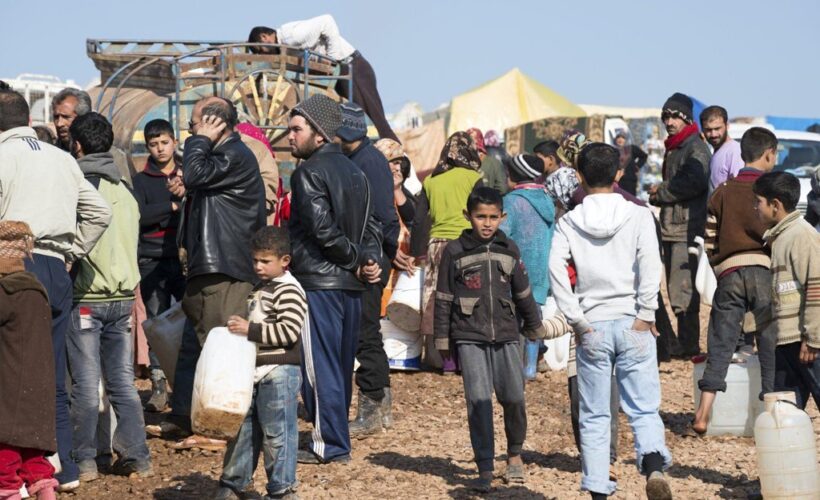
Al Huda Way Organization collaborates with communities to create and uphold dependable and uncontaminated water sources. Our lifesaving efforts comprise the installation of irrigation systems, construction of water tanks, and provision of hygiene training to communities.
Lifesaving water support
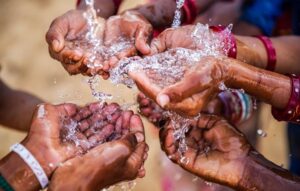 An estimated 785 million individuals worldwide lack access to clean water, resulting in dehydration, illness, and loss of life.
The scarcity of water not only affects daily tasks such as washing and cooking but also forces individuals to travel long distances in search of minimal water supply, if any.
Moreover, water is essential for livestock rearing and crop irrigation. When water supplies and rainfall decrease, many struggle to maintain their livelihoods and provide for their families.
To address this issue, Al Huda Way Organization partners with vulnerable communities to establish safe and dependable water sources. Our primary focus is on creating sustainable and long-lasting water sources.
Our life-saving interventions comprise the installation of irrigation systems, building water tanks, community training, distribution of hygiene kits, and repair of existing water systems.
Below are some examples of the techniques we implement to provide communities with reliable water sources.
Solar powered boreholes
 Solar-powered boreholes are a viable long-term solution to water scarcity, providing clean and dependable water to thousands of individuals. The borehole technology operates by utilizing solar panels to generate electricity, which then pumps water from underground. This method offers a reliable, sustainable solution, even in remote areas.
In addition to the borehole, a water tank and a distribution system are included. The Al Huda Way Organization also establishes water management committees, training ten people per borehole in water infrastructure management. This ensures that the community derives maximum benefit from the water source.
Once the borehole is drilled and fully operational, the local community has access to a safe and secure water supply for both drinking and irrigation purposes. This eliminates the risk of waterborne diseases and improves food production.
Drip irrigation system
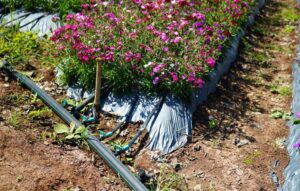 Drip irrigation is a specialized form of micro-irrigation that ensures a consistent and slow supply of water and nutrients to plant roots. This innovative technique provides local farmers with a dependable water source.
Furthermore, farmers are equipped with the necessary skills to operate and maintain this technology, ensuring long-term sustainability.
Drip irrigation offers numerous advantages, including a doubling of crop yields compared to traditional farming methods. Additionally, this method requires less labor, water, and fertilizer, ultimately increasing crop productivity and reducing seasonal production costs for small-scale farmers.
Micro dams
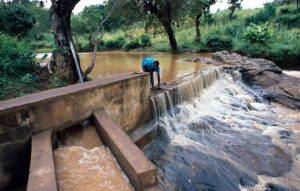 Micro dams are an excellent means of collecting and preserving water for both agricultural and domestic purposes. In Mali, the Al Huda Way Organization has erected micro dams to store rainwater that local farmers can subsequently utilize for crop irrigation. As a result, food production has improved, and livelihoods for local families have been enhanced.
Micro dams have proven to be an effective means of combating the adverse effects of climate change on local communities. Additionally, they have facilitated greater involvement of women within their communities and provided employment opportunities for young people.
Hand pumps
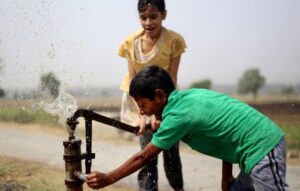 Flash flooding has the potential to destroy water sources and spread waterborne illnesses such as cholera. In areas with recurrent flooding, like Bangladesh, it is crucial to safeguard water supplies against pollution.
To guarantee that communities have access to clean and safe water, we have installed flood-resistant hand pumps. These specialized pumps are placed five feet above the ground level, and the water source is adequately covered to prevent floodwater from infiltrating.
These pumps typically serve hundreds of families, thereby eliminating the need for daily long-distance travel to procure clean water.
Rainwater storage cellar
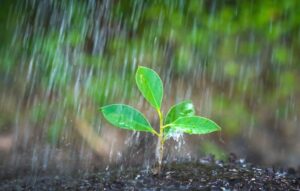 In several nations, rainfall is sporadic, with communities experiencing heavy precipitation followed by prolonged droughts. Effectively harvesting water during heavy rainfall is imperative for survival during the arid months.
A useful solution to the water scarcity challenge has been the construction of large water storage cellars that collect substantial volumes of rainwater during the wet season. The water is subsequently utilized for drinking and crop irrigation.
These storage cellars have enabled thousands of farmers to access clean water for their crops and livestock, allowing them to earn a livelihood and provide for their families.
Water trucking
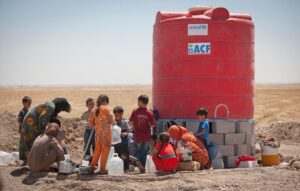 In times of crisis, families may be displaced from their homes and require immediate access to clean water. The most efficient method to deliver fresh, potable water is through the use of water trucks.
Water trucks may continue providing water for an extended period until long-term solutions are established.
Water trucking can be an effective emergency response in almost any setting, as long as a dependable water source is nearby.
For vulnerable families, this water supply often serves as a crucial lifeline.
Rainwater harvesting system
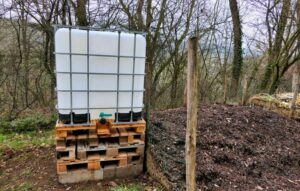 To ensure access to water during dry periods, Al Huda Way Organization assists families in capturing and storing rainwater, which is a natural and sustainable source of water. We provide families with the necessary tools and knowledge to gather rainwater in their local area, which can be used to grow food and for other domestic purposes. This approach is particularly useful for those living in hilly or mountainous regions where surface water sources may be limited. Harvesting rainwater provides families with reliable and easy access to clean water, and helps ensure their survival during dry periods.
Water ponds
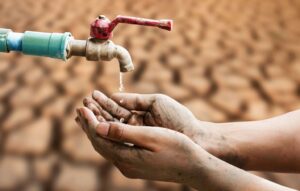 Water ponds are a useful way of collecting and storing water for various purposes such as cooking and irrigation, particularly in regions affected by extreme heat and environmental changes.
Al Huda Way Organization constructs water ponds to provide access to clean and safe water for families in need. These ponds help to ensure the survival of communities during periods of drought and provide a vital lifeline to vulnerable families.
Rainwater harvesting system
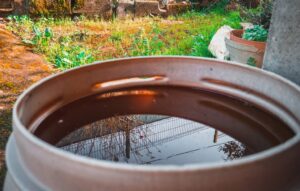 Desalination is a crucial process that eliminates salts and other minerals from saltwater. In various locations globally, such as Gaza, desalination has become a necessary water supply alternative as these regions lack freshwater but have access to seawater.
However, due to its relatively high maintenance cost, this alternative is only suitable in a communal setting such as schools, where constructing and maintaining small desalination plants is feasible.
Please donate to support our water programs across the globe and help save lives.