
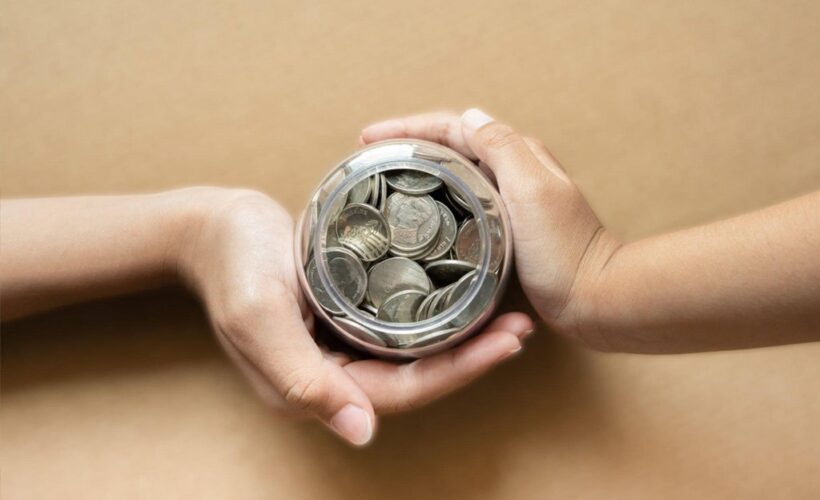
At Al Huda Way Organization, we strive to simplify the process of paying Zakat for you. Discover how we utilize your donations effectively and stay informed about the latest Nisab value.
What is Zakat?
Zakat, also known as zakaat or zakah, is an obligation for Muslims and one of the five pillars of Islam. This makes it mandatory for Muslims to give alms, along with the other four pillars of prayer (salah), fasting (sawm), pilgrimage (Hajj), and belief in Allah and His Messenger, Prophet Muhammad (peace be upon him) (shahadah). If a sane and adult Muslim owns wealth exceeding a certain amount, known as the Nisab, they are required to pay 2.5% of their wealth as Zakat.
“…and those in whose wealth there is a recognised right, for the needy and deprived” (Qur’an 70:24-5)
Once a year, Muslims who meet the eligibility criteria are required to pay Zakat, which becomes due as soon as a lunar (Islamic) year has passed since meeting or exceeding the Nisab (a certain amount of wealth). The Zakat collected from each Muslim is then distributed to those who qualify to receive it. Islamic Relief takes great care in distributing your Zakat to ensure that it reaches the most vulnerable individuals, including children, and those affected by war, disease, and climate disasters, and provides them with the necessary assistance.
You can determine whether you are eligible to pay Zakat by utilizing our Zakat Calculator.
What is Nisab?
The Nisab threshold is the minimum amount of wealth a Muslim must possess before becoming obligated to pay Zakat. It is also commonly known as the Nisab.
Gold and silver are the two values used to calculate the Nisab threshold. The Nisab is the value of 87.48 grams of gold or 612.36 grams of silver.
Nisab Value (as of 22/03/2023):
Using the value of silver (612.36 grams) – approximately $442.06
Using the value of gold (87.48 grams) – approximately $5,443.84
Zakat: A sacred pillar
Zakat is not only a fundamental pillar of Islam but also a transformative concept that has the potential to eradicate extreme poverty. This is the power of Zakat!
As Allah (SWT) tells us in the Holy Qur’an:
“And be steadfast in prayer and regular in charity: And whatever good you send forth for your souls before you, you shall find it with Allah.” (Qur’an 2:110)
Moreover, it is a right that the impoverished hold over us.
“Those in whose wealth there is a recognized right for the needy and the poor.”(Qur’an 70:24-25)
Imagine if the ten wealthiest individuals in the world paid Zakat – the total amount would be a staggering $9.25 billion! This amount of money would have immense power in addressing poverty.
By contributing your Zakat to Islamic Relief, your donation is utilized in the most efficient manner to alleviate the distress of the world’s most disadvantaged individuals.
Donate Your Zakat: Your donations enable us to save lives
Thanks to your Zakat contributions, we have been able to undertake crucial work with communities residing in disaster and conflict-ridden areas, such as drought and famine-stricken countries in East Africa, and communities impacted by the Syrian conflict. Your generosity has facilitated the development of sustainable livelihoods for these communities in the face of climate change, as well as improving the living conditions of vulnerable orphans and families across the world.
Praise be to God, you possess the ability to bring about life-changing transformations in people’s lives.
How Al Huda Way Organization Uses Your Donation
We utilize your donations in the most efficient manner to alleviate the suffering of the world’s most vulnerable people.
Our expenditures primarily focus on the first category of Zakat – assisting the poor and needy. As administrators of Zakat, we reserve a portion to cover administrative expenses associated with distributing aid, such as the cost of transportation. When you donate Zakat, we deduct a fixed amount of up to 12.5% in administrative fees.
How much is Zakat?
Your Zakat contribution should equate to 2.5% of your total zakatable wealth. For instance, if your total assets (after settling any debts owed) amount to $10,000, your Zakat payment would be $250. To determine the exact amount you owe, feel free to utilize our simple and complimentary Zakat Calculator.
Zakat FAQs
Below is a compilation of Frequently Asked Questions that you can refer to for additional guidance:
– Is Zakat mandatory for non-Muslims to pay?
No, Zakat is exclusively mandated for Muslims.
– Which individuals are qualified to receive Zakat?
There are eight categories of individuals who qualify to receive Zakat:
- The poor
- The needy
- Administrators of Zakat
- Those whose hearts have been recently reconciled
- Those who have been enslaved
- Those in debt
- In the cause of God
- Travelers (including refugees)
A poor individual is someone whose wealth, beyond their basic necessities, does not meet the nisab threshold. The beneficiary must not be part of your immediate family, which includes your spouse, children, parents, and grandparents. However, other relatives may receive your Zakat.
– What is the process to pay Zakat for previous years if I have missed them?
To pay Zakat for previous years that you have missed, calculate 2.5% of the total wealth you had at the end of each year for which you owe Zakat. If you are unsure about the exact amount of wealth you had, estimate it to the best of your ability. For example, if it is currently Ramadan 2023 and you have not paid Zakat for the last five years, you need to calculate the total wealth you owned at the end of every Ramadan for the last five years and pay 2.5% of that amount.
– Do I have to pay Zakat if I already donate a significant amount to charity throughout the year?
Most scholars of the past have agreed that Zakat should be paid on behalf of minors and individuals who are mentally incapable, and their legal guardians are responsible for paying the Zakat from their wealth. However, some scholars hold a different opinion, suggesting that Zakat is not obligatory for children and the mentally ill. It is advisable to consult with a scholar to obtain further clarification.
– How can I determine the amount of Zakat owed on my jewelry that includes gold, silver, and precious stones?
To determine the value on which Zakat must be paid for mixed jewellery that includes gold, silver, and precious stones, you can take the jewellery to a jeweller and ask them to assess the value of only the gold and silver parts. The jeweller’s evaluation of the gold and silver value will be the total amount subject to Zakat, while precious stones are exempt from Zakat.
– Should I include my savings for Hajj while calculating Zakat?
Yes, it must be included.
– Do I need to include money that I lent to a friend, who has informed me that they are able to return the money when calculating my Zakat?
Yes, as it is as if s/he is just storing your money.
– If I lent money to a poor friend 10 years ago with no expectation of getting the money back, but the friend has now repaid me, do I need to include this money when calculating Zakat?
If the borrowed money is paid back, then it is subject to Zakat (assuming the lender meets other requirements for paying Zakat). However, if the money is not returned, the lender’s intention for lending must be assessed. If the lender was reasonably certain that they would not receive the money back and cannot take legal action, then it is usually not subject to Zakat. However, because there are many factors to consider, it is best to seek advice from a scholar.
– How should I calculate Zakat on a house that I bought for the purpose of renting and sold after 5 years?
During the period in which you rented out the house and did not have the intention of selling, you are not required to pay Zakat on the house itself, but you must pay Zakat on the rental income received from it, as you would for any other income. Once you made the decision to sell the house, you must include it in your Zakatable assets from that day onwards, and pay Zakat on the selling price of the house. If you choose to pay in advance, you must make an estimate. This process must be repeated every year that the house remains unsold. However, to ensure complete clarity, it is best to consult with a scholar.
– How can Zakat be paid when running a clothing shop?
At the time of paying Zakat each year, you should calculate the total bulk selling price of all the clothing items in your shop that are available for sale. For instance, if the clothing items for sale in your shop have a total selling value of a specific amount, you would include this in your other Zakatable assets when computing your total Zakat payment.
– Can you provide me with information on your Zakat policy and how it is implemented?
Our website features a Zakat policy that has been scrutinized by scholars and is readily accessible.
– Can you tell me which scholars were consulted to develop your Zakat policy?
Our Zakat policy was developed after consultation with a panel of experts.